
Choosing between Google Ads and Meta Ads (Facebook & Instagram Ads) is one of the most critical decisions for businesses investing in digital advertising. Both platforms are powerful, but they work very differently. The right choice depends on your business goals, audience intent, budget, and growth stage.
This guide breaks down Google Ads vs Meta Ads across key parameters to help you make an informed, ROI-driven decision.
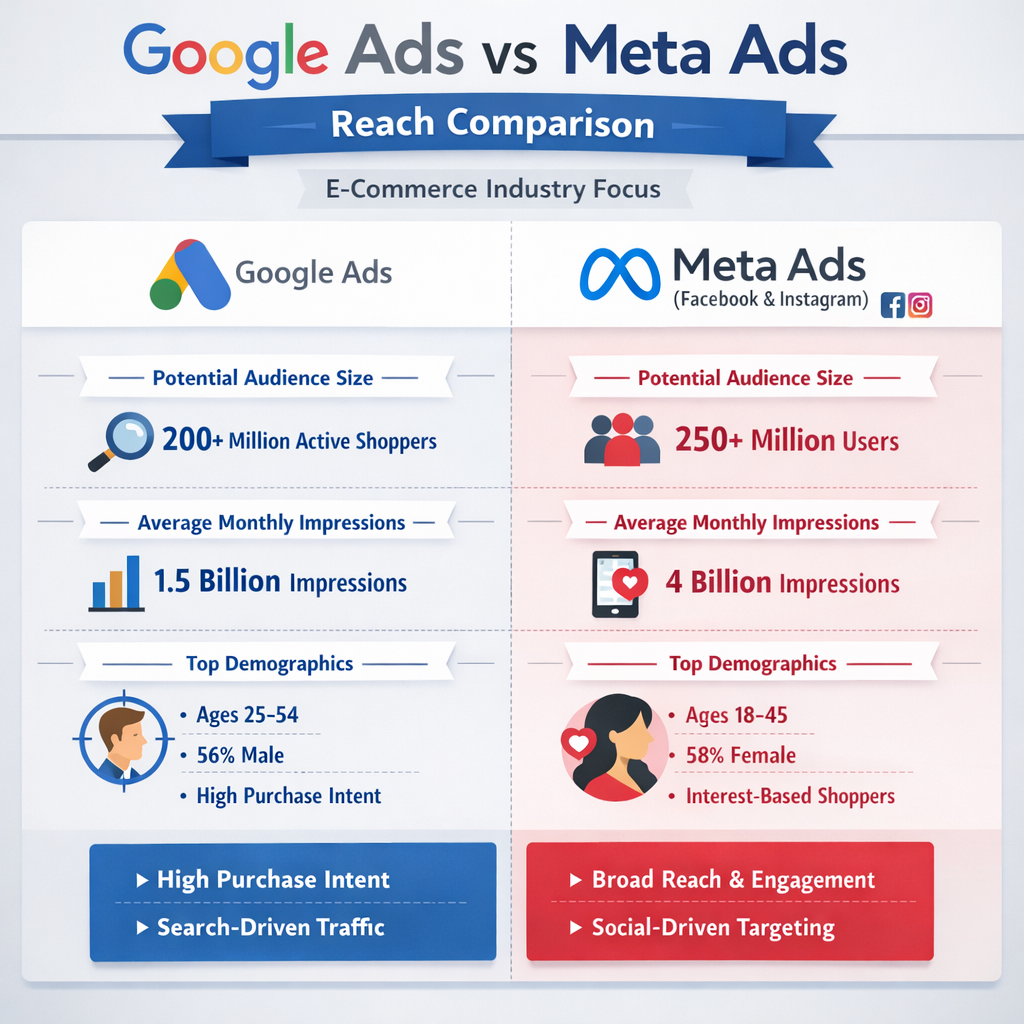
Reach
Google Ads
- Reaches users actively searching for products or services
- Over 8.5 billion searches per day globally
- Ideal for capturing high-intent demand
Meta Ads
- Reaches users while browsing Facebook, Instagram, Messenger, and Audience Network
- Excellent for mass awareness and discovery
- Strong visual and engagement-based reach
Verdict: Google Ads captures demand; Meta Ads creates demand
AD Formats
Google Ads Formats
- Search Ads (text-based)
- Display Ads
- Shopping Ads
- YouTube Video Ads
- Performance Max campaigns
Meta Ads Formats
- Image Ads
- Video Ads
- Carousel Ads
- Reels & Stories Ads
- Collection & Lead Form Ads
Verdict: Meta offers more creative flexibility, while Google focuses on intent-driven placements.
Targeting Options
Google Ads
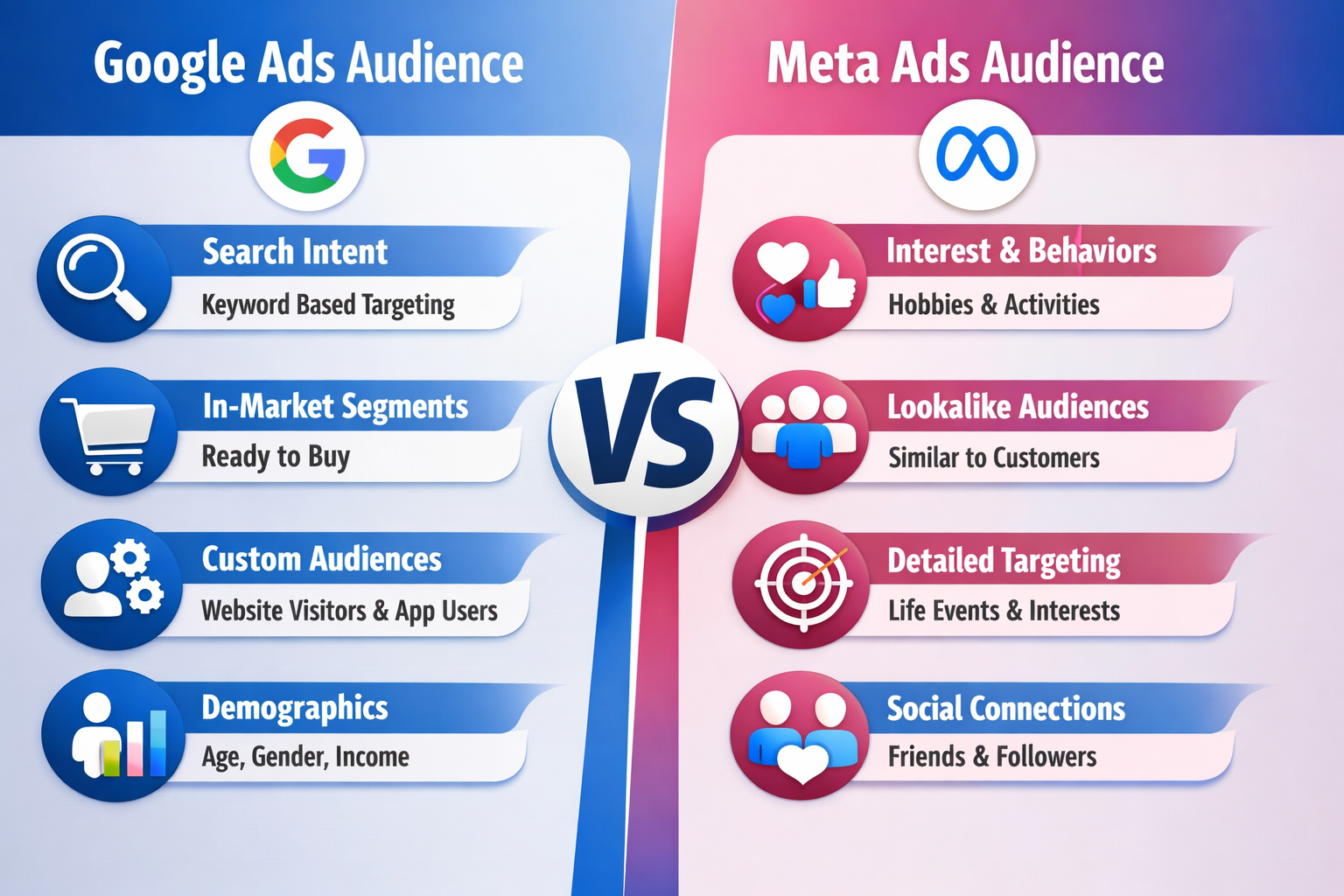
- Keyword targeting
- In-market & affinity audiences
- Location, device, and time-based targeting
- Remarketing based on search and site behavior
Meta Ads
- Detailed interest & behavior targeting
- Lookalike audiences
- Custom audiences (engagement, website, app)
- Demographic and lifestyle-based targeting
Verdict: Meta excels at audience profiling; Google excels at intent targeting.
Cost
Google Ads
- Higher CPC for competitive keywords
- Cost depends on industry and keyword intent
- Strong ROI when conversions are high-value
Meta Ads
- Generally lower CPC and CPM
- Cost-effective for awareness and lead generation
- Requires creative testing to maintain efficiency
Verdict: Meta is cheaper for reach; Google is costlier but often converts better.
Conversion Tracking
Google Ads
- Native integration with Google Analytics
- Tracks form fills, calls, purchases, and offline conversions
- Strong attribution for bottom-funnel actions
Meta Ads
- Uses Meta Pixel & Conversions API
- Effective for tracking engagement-based conversions
- Attribution affected by privacy changes
Verdict: Google offers more reliable conversion attribution.
Audience
Google Ads Audience
- Users with immediate intent
- Ready to compare, enquire, or purchase
- Works best for services and high-intent products
Meta Ads Audience
- Passive users scrolling content
- Not actively searching
- Ideal for brand building and nurturing
Verdict: Google = ready buyers, Meta = future buyers.
Performance Metrics
Google Ads Metrics
- CTR
- CPC
- Conversion Rate
- Cost per Conversion
- ROAS
Meta Ads Metrics
- Reach & Impressions
- Engagement Rate
- CPC & CPM
- Cost per Lead
- Frequency
Verdict: Google focuses on revenue metrics; Meta focuses on engagement and influence.
How to Maximize ROI with Google Ads vs Meta Ads
Google Ads ROI Tips
- Focus on high-intent keywords
- Optimize Quality Score
- Use conversion-focused landing pages
- Leverage remarketing lists
Meta Ads ROI Tips
- Test multiple creatives and hooks
- Use lookalike audiences
- Optimize for conversions, not clicks
- Refresh creatives frequently
Google Ads Strategies vs Meta Ads Strategies
Google Ads Strategies
- Search-first approach
- Performance Max for scale
- Competitor keyword bidding
- Smart bidding with conversion data
Meta Ads Strategies
- Funnel-based campaigns (Awareness → Consideration → Conversion)
- Creative testing frameworks
- Retargeting warm audiences
- Scaling via lookalikes
