
Did you know, Google Shopping Ads put your products in front of purchase-ready customers.
Google Shopping Ads help ecommerce brands promote products directly to people searching with buying intent. Instead of only showing text, Shopping Ads display product details such as image, title, price, store name, and product information before the user clicks.
Advaita helps ecommerce businesses use Google Shopping Ads with product feed optimization, Merchant Center setup, campaign structure, bidding, product grouping, conversion tracking, ROAS analysis, and ongoing optimization. The goal is not just product visibility—it is profitable traffic, better product discovery, more purchases, and measurable ecommerce growth.























What Can Google Shopping Ads Do for Your Business?
Drive Online Sales
Maximize Catalog Profits
Boost Dynamic Retargeting
Accelerate Customer Growth
Capture Active Buyers at the Exact Moment of Commercial Purchase Intent
Google Shopping campaigns showcase your real-time product inventory, exact pricing, images, and brand name directly at the top of Google Search result pages. By displaying detailed product data before a user even clicks, Shopping ads pre-qualify incoming site traffic, driving high-intent shoppers directly to your product detail pages to complete immediate online purchases.
Advaita structures optimized product feed management protocols, refining titles, custom labels, GTINs, and high-resolution image assets. We deploy Performance Max and smart bidding strategies that continuously reallocate budget toward high-margin SKUs, significantly lowering Cost Per Acquisition (CPA) while expanding return on ad spend (ROAS).
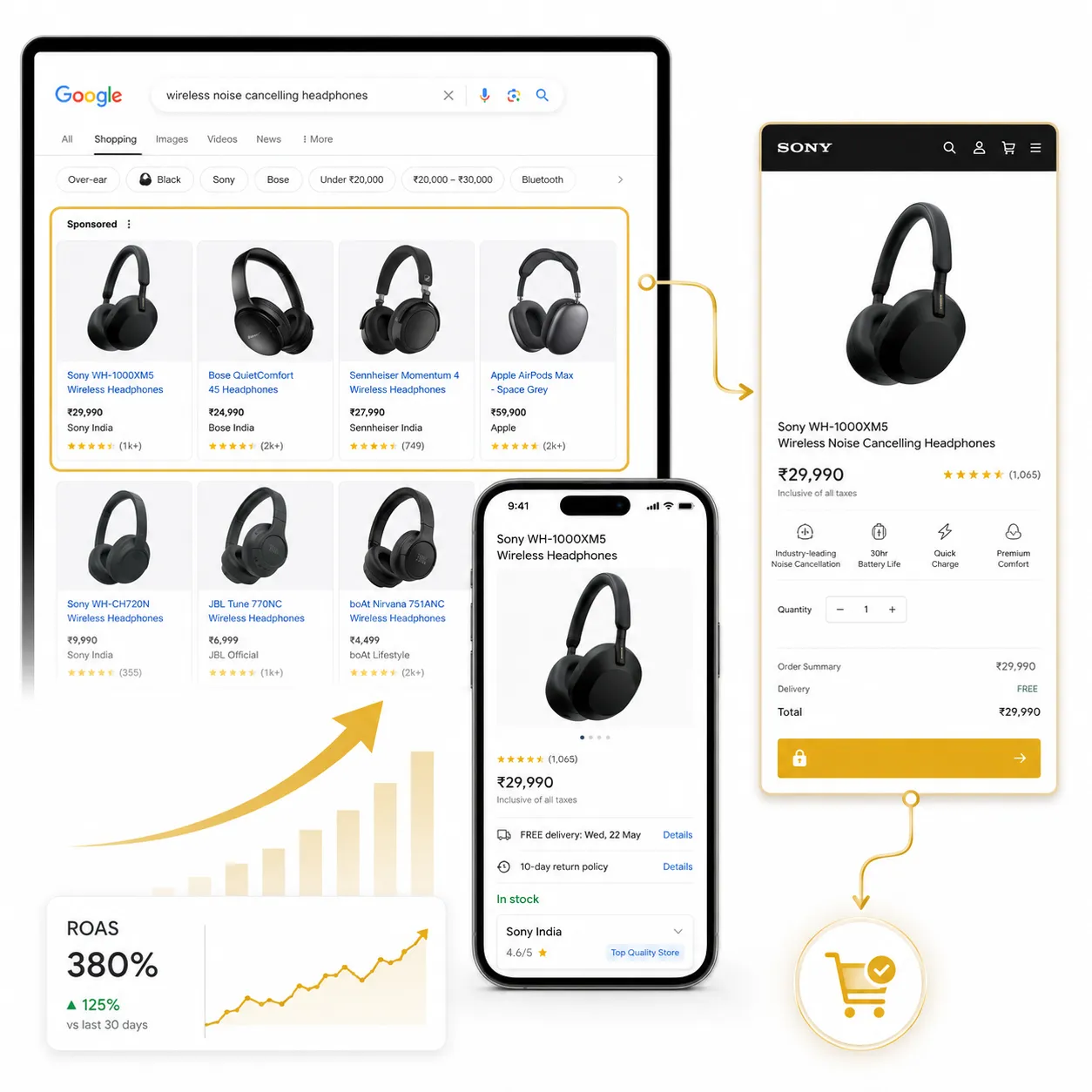

Maximize Profitability by Prioritizing Top-Performing Product Lines
Not all inventory yields equal profit. Catalog-focused shopping objectives allow e-commerce businesses to dynamically promote specific collections, seasonal clearances, or high-margin product categories directly to consumers searching for specific product attributes and brands.
Advaita organizes product feeds into segmented custom label hierarchies based on profit margins, price points, and inventory velocity. This granular segmentation prevents low-margin items from consuming ad budget and ensures bid management aligns directly with your bottom-line profitability.
Re-Engage High-Intent Visitors and Recover Abandoned Shopping Carts
Dynamic Shopping retargeting shows exact products that past visitors previously viewed or added to their carts while browsing across search networks and partner sites. Reminding interested shoppers of their viewed items brings warm traffic back to finalize checkout.
Advaita implements advanced audience segmentation and dynamic tag parameters to serve personalized product ad formats. By pairing dynamic product ads with targeted promotional incentives, we overcome buyer hesitation and maximize total cart recovery rates.

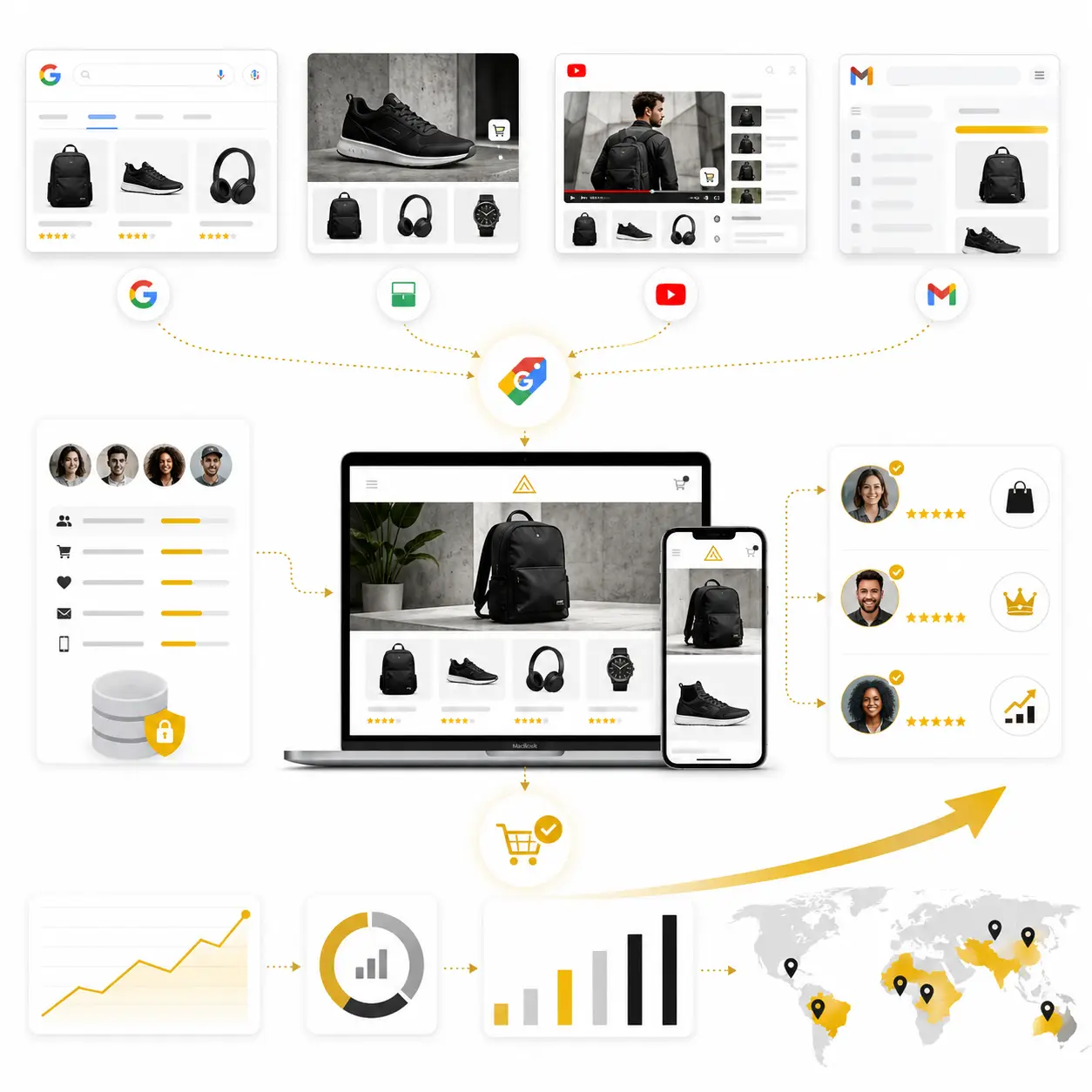
Expand Market Share by Winning High-Value First-Time Buyers
Shopping campaigns allow growing retail brands to place their products alongside established industry competitors in front of uncommitted consumers. Winning first-time buyers through search shopping channels fuels long-term Customer Lifetime Value (LTV) across your business.
Advaita configures New Customer Acquisition (NCA) bidding modes within Shopping campaigns to bid more aggressively for users who have not previously purchased from your store. We align initial buyer acquisition costs against predicted LTV to ensure sustainable customer acquisition.
Our Google Shopping Ads Performance Framework
Business & Product Goal Mapping
Define whether the campaign should increase sales, leads, website traffic, local store visits, or custom product growth.
Merchant Center Setup
Review Merchant Center account, product approvals, feed sources, policies, product data, shipping, tax, and account health.
Product Feed Optimization
Improve product titles, images, descriptions, categories, attributes, GTINs, pricing, availability, variants, and feed labels.
Campaign Structure
Build campaigns by objective, product category, margin, bestseller status, seasonality, stock availability, feed label, and sales value.
Product Group Strategy
Segment products into meaningful product groups so budget, bids, and reporting are easier to control and optimize.
Optimize & Scale
Improve feeds, bids, budgets, product groups, search terms, negative keywords, product pages, ROAS, CPA, and margin-based scaling.
Tracking & Analytics Setup
Set up product views, add-to-cart, checkout, purchase, revenue, ROAS, UTMs, conversion tracking, Google Analytics, and ecommerce reports.
Other Services

Meta Marketing
Using the Advanced Blurb Module brings endless design possibilities to show your information elegantly.

E-Commerce Marketing
Using the Advanced Blurb Module brings endless design possibilities to show your information elegantly.

Google Marketing
Using the Advanced Blurb Module brings endless design possibilities to show your information elegantly.
FAQs About Google Shopping Advertising
Here’s everything you may ask.
1.What are Google Shopping Ads?
Google Shopping Ads are paid product ads that show product details such as image, title, price, store name, and product information to users searching on Google.
2.How do Google Shopping Ads work?
Google Shopping Ads use product data from your Merchant Center feed to show relevant product ads to users searching for related products.
3.Which businesses should use Google Shopping Ads?
Google Shopping Ads work well for ecommerce stores, D2C brands, retailers, product manufacturers, fashion brands, beauty brands, electronics sellers, furniture sellers, home decor brands, and product-based businesses.
4.What are the main Google Shopping campaign objectives?
The main objective options include Sales, Leads, Website Traffic, Local Store Visits and Promotions, and Create a Campaign Without Goal Guidance.
5.Are Google Shopping Ads good for ecommerce sales?
Yes. Google Shopping Ads are useful for ecommerce because they show product information before the user clicks, helping attract purchase-intent shoppers.
6.Can Google Shopping Ads generate leads?
Yes. Google Shopping Ads can support lead generation for high-value, custom, bulk, B2B, or enquiry-based products where customers need to contact the business before buying.
7.Can Google Shopping Ads drive website traffic?
Yes. Google Shopping Ads can send users to product pages, collection pages, category pages, offer pages, and ecommerce landing pages.
8.Can Google Shopping Ads support local store visits?
Yes. Shopping campaigns can support local products and local store visit-focused campaigns when the required local product data and setup are available.
9.What is Google Merchant Center?
Google Merchant Center is where ecommerce businesses upload and manage product data that Google uses to show Shopping Ads and product listings.
10.What is a product feed?
A product feed is a structured file or data source that includes product information such as title, description, image, price, availability, category, brand, and product ID.
11.Why is product feed optimization important?
Product feed optimization improves how products are understood, matched, displayed, and promoted in Shopping campaigns. Better feed quality can improve visibility and performance.
12.What are product groups in Shopping campaigns?
Product groups allow advertisers to organize and manage products inside a Shopping campaign based on attributes such as category, brand, item ID, condition, product type, or custom labels.
13.What are feed labels?
Feed labels help advertisers organize and advertise specific data sources or product feeds from Merchant Center.
14.What are local inventory ads?
Local inventory ads help promote products that are available in physical stores when local product data is submitted through Merchant Center.
15.Why are my Google Shopping Ads not showing?
This can happen because of Merchant Center disapprovals, feed errors, inactive campaigns, incorrect setup, low bids, limited budget, policy issues, or product data problems.
16.Why are my Shopping Ads getting clicks but no sales?
This can happen because of weak product pages, high prices, poor images, low trust, unclear delivery information, bad checkout experience, tracking issues, or low purchase intent.
17.Do Google Shopping Ads need conversion tracking?
Yes. Conversion tracking is important for measuring purchases, revenue, cart actions, ROAS, and product-level performance.
18.How do you measure Google Shopping Ads performance?
Important metrics include impressions, clicks, CTR, CPC, product views, add-to-cart actions, purchases, conversion value, CPA, ROAS, average order value, margin, and product-level performance.
19.How long does Google Shopping Ads take to work?
Google Shopping Ads can start generating traffic quickly, but stable sales performance usually needs Merchant Center setup, feed optimization, bidding tests, product group analysis, conversion tracking, and product page improvement.
20.Why choose Advaita for Google Shopping Ads?
Advaita builds Google Shopping Ads with a performance-first ecommerce strategy. We connect Merchant Center, product feeds, campaign objectives, product groups, landing pages, conversion tracking, ROAS reporting, remarketing, and scaling to improve measurable ecommerce growth.